
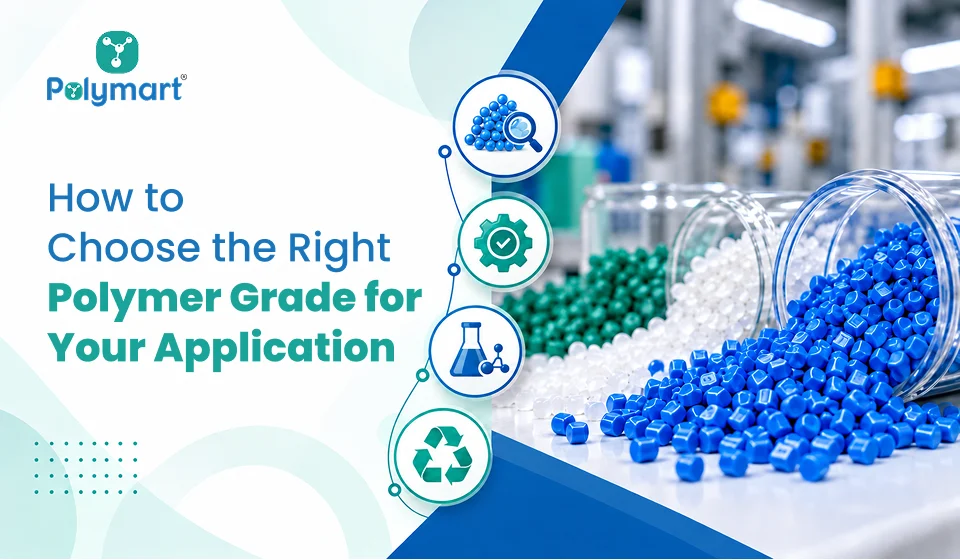
Choosing the right polymer grade can make the difference between a product that performs as expected and one that falls short.
But with so many Polymer Grades available, how do you know which one actually fits your application?
Polymer grade selection depends on more than just the polymer type. Processing method, strength, flexibility, temperature resistance, durability, and end-use requirements all matter.
In this Polymer Selection Guide, we’ll break down How to Choose the Right Polymer Grade for packaging, pipes, industrial products, and other applications and the key factors you should check before making a selection.
TL;DR
- Define the application first to understand the performance requirements your polymer must meet.
- Compare key polymer properties such as strength, flexibility, temperature resistance, chemical resistance, density, and melt flow.
- Match the polymer grade to the processing method, such as injection molding, extrusion, or blow molding.
- Consider industry and product requirements, including food-contact standards, durability, and operating conditions.
- Compare cost, availability, and technical data to select the polymer grade that offers the right balance of performance and production efficiency.
Why is the Right Polymer Grade for the Application Important?
Two products can use the same polymer but require completely different grades. The reason is simple: Polymer Grades are formulated with different flow, strength, density, thermal, and processing characteristics.
The right polymer grade selection can help you achieve:
- Better product performance: Match strength, flexibility, impact resistance, and durability to the end use.
- Easier processing: Properties such as melt flow affect how efficiently a material moves through molding and extrusion equipment.
- Better cost efficiency: The right grade can reduce processing issues, material waste, and production inefficiencies.
- Application-specific performance: For example, HDPE is commonly used for pipes, bottles, and industrial products, while PP is widely used in food packaging, appliances, and pipes.
So, choosing the right polymer grade is not simply about selecting the cheapest or most commonly used material. The real question is: which grade gives your product the right balance of performance, processing, and cost? Let’s find out.
How to Choose the Right Polymer Grade?
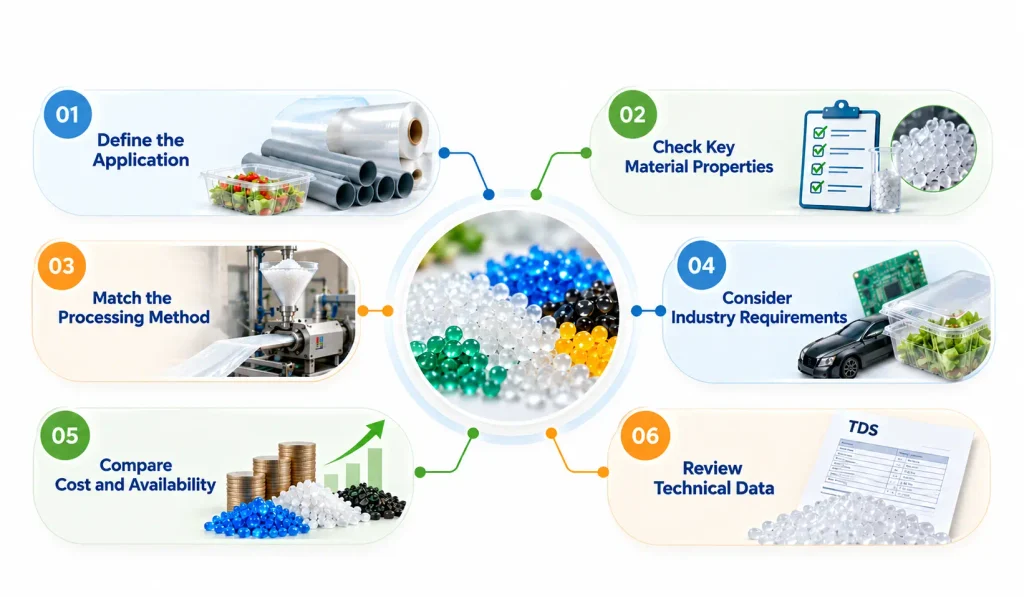
A good polymer grade selection starts with understanding what your product needs to withstand and how it will be manufactured. Instead of choosing a material based only on its polymer name, consider these key factors:
1.Define the Application
Start with the product’s end use. A polymer grade for packaging may need good clarity and flexibility, while a polymer grade for pipes may require strength, durability, and resistance to pressure and chemicals.
2. Check Key Material Properties
Compare properties such as:
- Tensile and impact strength
- Flexibility and hardness
- Temperature resistance
- Chemical and moisture resistance
- Density
- Melt flow rate
- Transparency or appearance
These properties help determine whether a grade can deliver the required performance.
3. Match the Processing Method
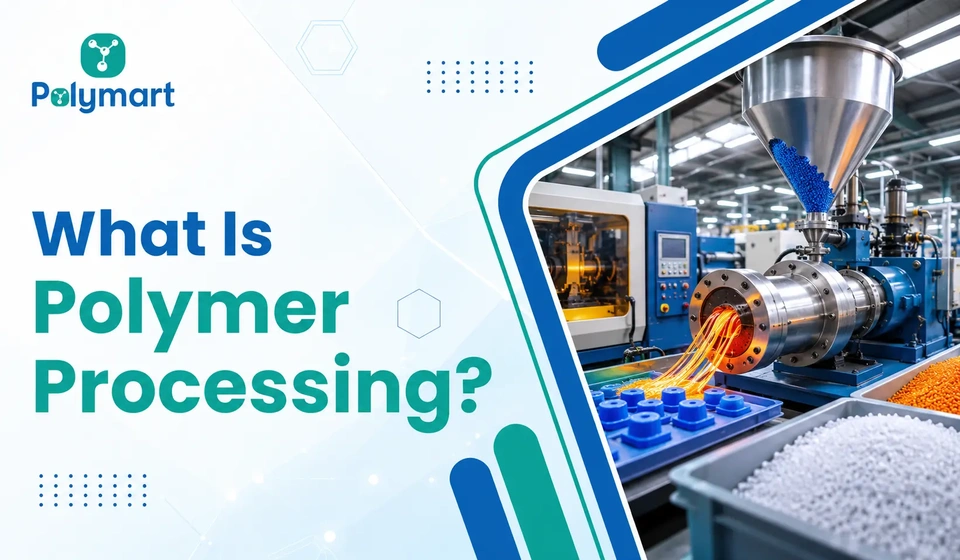
The same polymer may have grades designed for injection molding, extrusion, blow molding, or other processes. Your Polymer Processing method should therefore be considered before selecting a grade.
4. Consider Industry Requirements
Application requirements vary across industries. For example, food packaging may require food-contact compliance, while automotive or electronic products may need enhanced heat, impact, or flame resistance.
5. Compare Cost and Availability
The best grade is not always the most expensive one. Compare performance, processing efficiency, availability, and overall cost to find a practical option for your production needs.
6. Review Technical Data
Before finalizing your choice, check the manufacturer’s technical data sheet (TDS) for the specific grade. This gives you measurable properties and processing recommendations rather than relying on general assumptions about the polymer.
In short, the best polymer grade is the one that meets your product’s performance requirements while fitting your manufacturing process and budget.
PolyMart Can Help!
Choosing between different Industrial Polymer Grades, Engineering Polymer Grades, and Commodity Polymer Grades can be confusing when every grade has different specifications. This is where PolyMart can make the process easier.
At PolyMart, you can explore different Polymer Grades based on your application, compare material options, and connect with suppliers. Whether you need PP polymer grades, HDPE polymer grades, ABS polymer grades, or other materials, the platform helps you make a more informed choice.
With PolyMart, you can also Buy Polymers online or Sell Polymers online, making polymer sourcing and selling more convenient in one place.
Check the types of polymers available at PolyMart.
Frequently Asked Questions(FAQs)
Which is the best Polymer grade for food packaging?
PP and PET polymer grades are widely used for food packaging. The right grade should meet the required food-contact, strength, barrier, and processing requirements.
Which is the best Polymer grade for pipes?
HDPE polymer grades are commonly used for pipes because of their durability, chemical resistance, and flexibility. PVC and other materials may also suit specific pipe applications.
How to select polymers for different applications?
Consider the product’s end use, required polymer properties, processing method, operating conditions, regulatory requirements, and cost before selecting a grade.
Why are polymer properties important?
Polymer properties determine how a material performs in real-world conditions. Strength, flexibility, heat resistance, chemical resistance, and melt flow are important for effective Polymer Material Selection.
Can the same polymer have different grades?
Yes. The same polymer can have multiple Polymer Grades with different properties and processing characteristics, making each grade suitable for different applications.