
Have you ever wondered how polymer raw materials like polymer resin and plastic granules are transformed into everyday products such as bottles, pipes, containers, and automotive parts? The answer lies in polymer processing, a crucial step that shapes raw materials into finished products using different polymer processing methods.
But what is polymer processing, and why is it so important in modern manufacturing? In this blog, we’ll explain how it works, the materials involved, and the key techniques used to create the plastic products we rely on every day.
TL;DR
Polymer processing is the process of converting polymer raw materials, such as polymer resin and plastic granules, into finished products using techniques like extrusion, injection moulding, blow moulding, compression moulding, and rotational moulding. It is an essential part of manufacturing that helps produce high-quality plastic products used across industries such as packaging, automotive, healthcare, and construction.
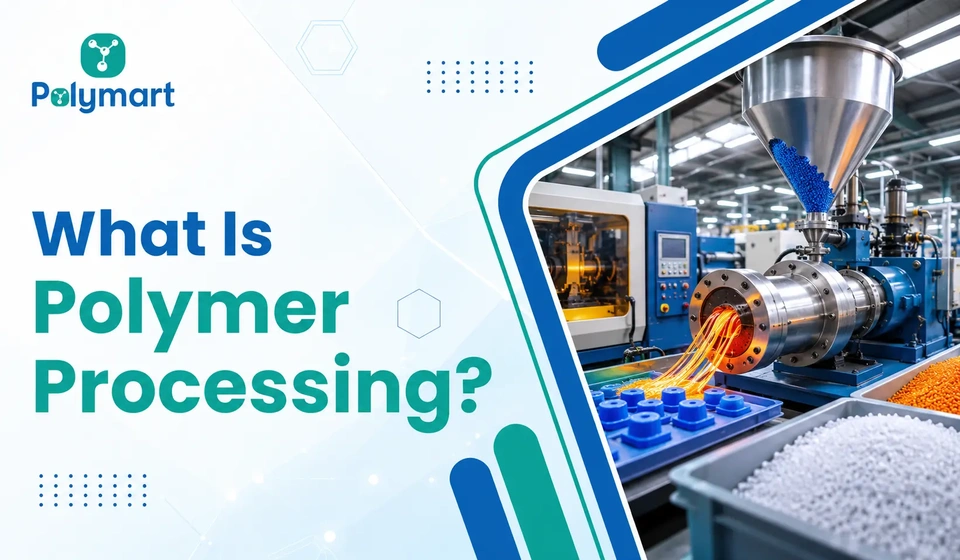
What is Polymer Processing?
Polymer processing is the process of converting polymer raw materials, such as polymer resin and plastic granules, into finished products by applying heat, pressure, and shaping techniques. It is a key part of the polymer manufacturing process, helping manufacturers produce everything from packaging and pipes to automotive and medical components.
Common polymer processing methods include polymer extrusion, injection moulding, blow moulding, compression moulding, and rotational moulding. The right method depends on the material, product design, and production requirements.
Why Is Polymer Processing Important?
Polymer processing is an essential part of modern manufacturing because it helps convert raw polymers into reliable, high-quality products used across industries. Here’s why it matters:
- Ensures consistent product quality: Advanced polymer processing methods produce products with accurate dimensions, strength, and durability.
- Supports efficient production: The polymer manufacturing process allows manufacturers to produce large volumes quickly while reducing production costs.
- Offers design flexibility: Different polymer processing techniques make it possible to create products in a wide range of shapes, sizes, and complex designs.
- Serves multiple industries: Polymer processing is widely used in packaging, automotive, healthcare, construction, electronics, and consumer goods manufacturing.
- Reduces material waste: Modern processing techniques improve material usage, making production more efficient and sustainable.
- Improves product performance: The right processing method enhances the strength, appearance, and functionality of the final product.
Types of Materials Used in Polymer Processing
The choice of polymer raw materials plays a major role in the quality and performance of the final product.
Understanding the different types of polymers and their properties helps manufacturers choose the right material for specific applications and processing methods.
Some of the most commonly used materials include:
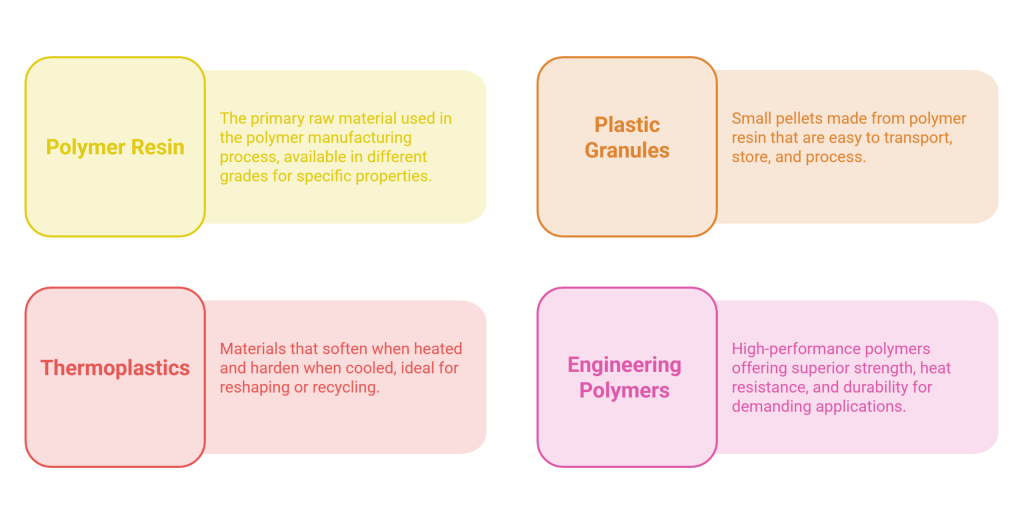
- Polymer Resin: Polymer resin is the primary raw material used in the polymer manufacturing process. It is available in different grades, allowing manufacturers to produce products with specific properties such as flexibility, strength, or chemical resistance.
- Plastic Granules: Plastic granules are small pellets made from polymer resin. They are easy to transport, store, and process, making them one of the most commonly used materials in polymer processing methods.
- Thermoplastics: Thermoplastics soften when heated and harden again when cooled without losing their properties. This makes them ideal for products that require reshaping or recycling, such as packaging, containers, and automotive components.
- Engineering Polymers: These are high-performance polymers designed for demanding applications. They offer superior strength, heat resistance, and durability, making them suitable for industries such as automotive, electronics, aerospace, and healthcare.
Common Polymer Processing Methods
Different polymer processing methods are used depending on the type of material, product design, and production requirements. Here are some of the most widely used polymer processing techniques:
- Polymer Extrusion
Polymer extrusion involves melting the polymer and pushing it through a shaped die to create continuous products such as pipes, sheets, films, and profiles. It is ideal for high-volume production.
- Injection Moulding
In injection molding, molten polymer is injected into a mould, where it cools and solidifies into the desired shape. This method is commonly used to manufacture containers, automotive parts, toys, and electronic components.
- Blow Moulding
Blow moulding is used to produce hollow plastic products such as bottles, tanks, and containers. Air is blown into molten plastic inside a mould to create the final shape.
- Compression Moulding
In compression moulding, a pre-measured amount of polymer is placed into a heated mould and compressed under pressure. It is commonly used for durable components in the automotive and electrical industries.
- Rotational Moulding
Rotational moulding involves heating and rotating a mould so the polymer coats its inner surface evenly. This technique is ideal for manufacturing large hollow products like storage tanks, playground equipment, and bins.
Each of these polymer processing methods offers unique advantages, and the right choice depends on the material, product design, production volume, and end-use application.
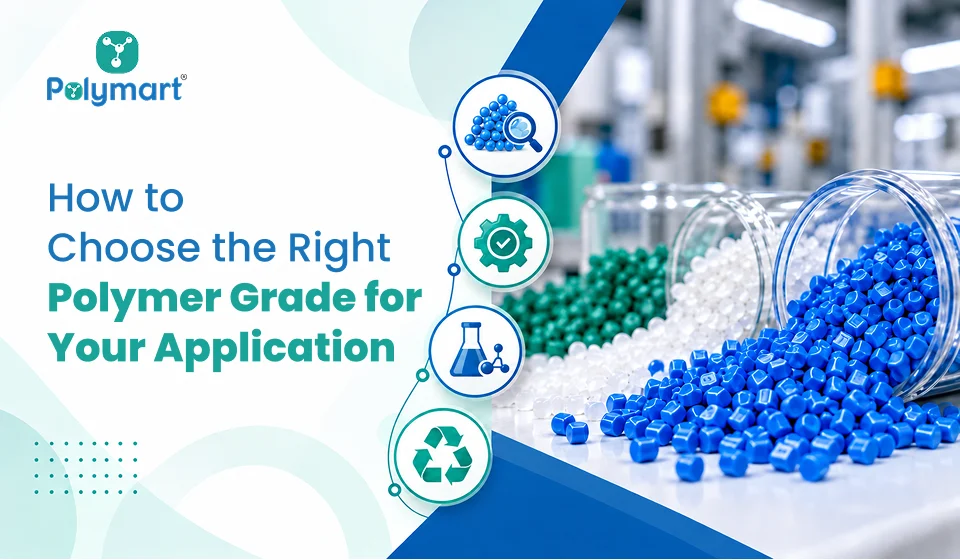
How to Choose the Right Polymer Material for Your Application?
Choosing the right polymer raw materials is the foundation of a successful product. The ideal material depends on your product’s purpose, the environment it will be used in, and the manufacturing process. Selecting the wrong material can lead to higher costs, poor performance, and production challenges.
When choosing a polymer material, consider these factors:
- Know Your Application: Identify how and where the product will be used. Different industries, such as packaging, automotive, healthcare, and construction, have different material requirements.
- Evaluate Material Properties: Look for the right balance of strength, flexibility, impact resistance, and durability based on your product’s needs.
- Consider Environmental Conditions: If the product will be exposed to heat, moisture, UV rays, or chemicals, choose a material that can withstand those conditions without degrading.
- Ensure Processing Compatibility: The material should be suitable for your preferred polymer processing methods, whether it’s polymer extrusion, blow moulding, compression moulding, or rotational moulding.
- Balance Cost and Performance: While cost is important, choosing a high-quality material can improve product reliability and reduce long-term manufacturing costs.
- Choose Sustainable Options: If sustainability is a priority, consider recyclable thermoplastics or other eco-friendly polymer materials that support environmental goals.
By understanding your application and comparing material properties, you can select the right polymer for better product quality, efficient manufacturing, and long-term performance.
Final Thoughts
Understanding what polymer processing is helps you make better decisions when selecting materials, manufacturing methods, and suppliers. By choosing the right polymer raw materials and suitable polymer processing methods, businesses can improve product quality, reduce production costs, and achieve better manufacturing outcomes.
At Polymart, we simplify the sourcing process by providing a trusted B2B marketplace where businesses can Buy Polymers online and even Sell Polymers online with ease. Whether you’re looking for polymer resin, plastic granules, thermoplastics, or other polymer materials, Polymart connects buyers and sellers on a single platform, making sourcing faster, more transparent, and more efficient.
As the polymer processing industry continues to grow, having the right materials and the right marketplace to source them from can make all the difference.
Check out PolyMart today.
FAQs
How are polymers processed into finished products?
Polymers are processed by melting or softening polymer raw materials and shaping them using polymer processing methods such as polymer extrusion, injection moulding, blow moulding, compression moulding, and rotational moulding. The products are then cooled, finished, and inspected before use.
What is the difference between thermoplastic processing and thermoset processing?
Thermoplastic processing involves materials that can be melted, reshaped, and recycled multiple times. Thermoset materials, however, harden permanently after curing and cannot be remelted or reshaped.
Which industries use polymer processing the most?
Polymer processing is widely used in packaging, automotive, healthcare, construction, electronics, consumer goods, and agriculture to manufacture a variety of plastic products.
What factors affect the polymer manufacturing process?
The polymer manufacturing process is influenced by the type of polymer, product design, processing method, temperature, pressure, production volume, and the quality of polymer raw materials.
What is Polymart?
Polymart is a B2B marketplace that connects buyers and sellers of polymer products. It simplifies sourcing by offering a wide range of polymer materials from trusted suppliers on a single platform.
How can Polymart help businesses buy and sell polymer products?
With Polymart, businesses can easily discover suppliers, compare polymer products, connect with verified buyers or sellers, and streamline the buying and selling process, making procurement faster and more efficient.