
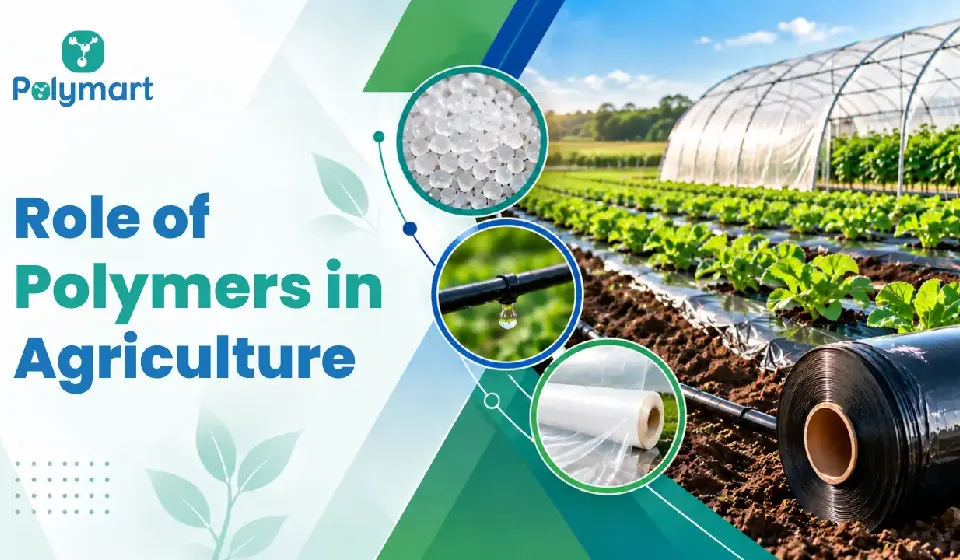
Polymers in agriculture play a vital role in modern farming by improving water conservation, crop protection, and productivity. From mulch films and greenhouse films to drip irrigation systems and water retaining polymers, they help farmers use resources more efficiently while supporting sustainable agricultural practices.
Modern farming relies on innovative materials to improve productivity, conserve resources, and meet growing food demands. Polymers in agriculture play a vital role by enabling efficient solutions such as agricultural plastic films, mulch films, greenhouse films, drip irrigation systems, irrigation pipes, and water retaining polymers.
These polymer materials help farmers save water, protect crops, and improve overall farming efficiency.
In this blog, we’ll explore the role of polymers in modern agriculture, their key applications, and how to choose the right polymer raw materials for agricultural needs.
What Are Polymers in Agriculture?
Polymers in agriculture are natural or synthetic materials used to improve farming efficiency, crop protection, and resource management. Their durability, flexibility, and resistance to moisture and chemicals make them ideal for a wide range of agricultural applications.
Common polymer materials include polyethylene (PE), polypropylene (PP), PVC, and PET to manufacture products like mulch films, greenhouse films, irrigation pipes, and water management systems.
Why Are Polymers Important in Modern Agriculture?
Polymers in agriculture have become essential because they enable smarter irrigation, better crop protection, and higher productivity. According to the FAO, agricultural plastics play a significant role in improving crop yields, reducing water use, and extending growing seasons when used responsibly.
Why Are Polymers Important in Modern Agriculture?
- Improve water efficiency by supporting drip irrigation systems, HDPE pipes, and water retaining polymers.
- Increase crop yields by creating optimal growing conditions with mulch films and greenhouse films.
- Conserve soil moisture by reducing water evaporation and maintaining soil temperature.
- Reduce weed growth with agricultural plastic films, lowering the need for herbicides.
- Protect crops from harsh weather, UV exposure, pests, and diseases.
- Enhance fertilizer efficiency through controlled-release and protective polymer applications.
- Lower maintenance costs thanks to durable and long-lasting polymer materials.
- Support sustainable farming by enabling precision agriculture and the adoption of recyclable or biodegradable polymer solutions.
Applications of Polymers in Agriculture
Polymers in agriculture are used across every stage of modern farming, from irrigation and crop protection to storage and soil management. Their strength, durability, and versatility make them essential polymer materials for improving productivity, conserving resources, and reducing operational costs.
Agricultural Plastic Films
Used to protect crops, regulate soil temperature, reduce weed growth, and retain soil moisture for healthier plant development.
Mulch Films
Mulch films help minimize water evaporation, suppress weeds, improve soil temperature, and enhance crop quality while reducing irrigation needs.
Greenhouse Films
Greenhouse films create controlled growing environments by providing UV protection, maintaining temperature, and improving light diffusion for higher yields.
Irrigation Pipes & Drip Irrigation Systems
HDPE irrigation pipes and drip irrigation systems deliver water directly to plant roots, improving water efficiency and reducing wastage.
Water Retaining Polymers
Superabsorbent water retaining polymers store and gradually release moisture, helping crops withstand dry conditions and reducing irrigation frequency.
Seed Coatings & Controlled-Release Fertilizers
Specialized polymer coatings improve seed germination and enable the slow release of nutrients, increasing fertilizer efficiency while minimizing nutrient loss.
Choosing the Right Polymer Materials for Agricultural Applications
Selecting the right polymer materials is essential for achieving durability, efficiency, and long-term performance in agricultural applications. The ideal choice depends on the farming environment, intended use, and sustainability goals.
When choosing polymer raw materials, consider the following factors:
- Application: Select materials designed for mulch films, greenhouse films, irrigation pipes, or water management systems.
- Weather & UV Resistance: Ensure the polymer can withstand sunlight, temperature changes, and outdoor conditions.
- Strength & Durability: Choose materials that resist wear, chemicals, and moisture for a longer service life.
- Water Efficiency: For irrigation, prioritize high-quality polymers suitable for drip irrigation systems and HDPE pipes.
- Sustainability: Consider recyclable or biodegradable polymer options to reduce environmental impact.
- Quality & Compliance: Source materials that meet industry standards for reliable and consistent agricultural performance.
Choosing high-quality polymers improves farming efficiency but also reduces maintenance costs and supports more sustainable agricultural practices.
Polymart Helps Businesses Source High-Quality Polymer Materials!
Finding reliable polymer raw materials is essential for manufacturing high-performance agricultural products. Polymart connects businesses with trusted suppliers, making it easier to source quality polymer materials for applications such as agricultural films, irrigation systems, pipes, and other farming solutions.
With Polymart, businesses can:
- Source a wide range of quality polymer raw materials from verified suppliers.
- Compare products and suppliers in one place for better purchasing decisions.
- Buy Polymers online quickly and efficiently.
- Sell Polymers online to reach a wider network of buyers.
- Stay updated with industry trends and innovations driving the Polymer Revolution.
Whether you’re a manufacturer, distributor, or agricultural supplier, Polymart simplifies polymer sourcing by connecting you with the right materials and business opportunities.
Final Thoughts
Polymers in agriculture have become an essential part of modern farming, helping improve water efficiency, protect crops, and increase productivity through solutions like mulch films, greenhouse films, drip irrigation systems, and other advanced polymer materials.
Choosing the right polymer raw materials is key to building reliable and sustainable agricultural solutions.
If you’re looking to source quality materials or connect with trusted suppliers, Polymart offers a convenient platform to explore, compare, and buy polymers online for your business needs.
Frequently Asked Questions(FAQs)
What are the types of polymers used in agriculture?
The most common types of polymers used in agriculture include polyethylene (PE), polypropylene (PP), PVC, HDPE, LDPE, PET, and biodegradable polymers. These materials are used in irrigation systems, agricultural films, and crop protection products.
What are the polymer materials used in farming?
Common polymer materials used in farming include agricultural plastic films, mulch films, greenhouse films, HDPE irrigation pipes, drip irrigation systems, water storage tanks, and water retaining polymers that improve farming efficiency.
What are the polymer solutions for modern agriculture?
Polymer solutions for modern agriculture include drip irrigation systems, greenhouse films, mulch films, water retaining polymers, controlled-release fertilizer coatings, and sustainable polymer materials that help improve crop yields while conserving resources.
What is the role of polymers in agriculture?
The role of polymers in agriculture is to improve water management, protect crops, enhance soil moisture retention, increase productivity, and support sustainable farming through durable and efficient polymer-based solutions.
Which polymers are commonly used in agriculture?
The most widely used polymers in agriculture are polyethylene (PE), HDPE, LDPE, polypropylene (PP), PVC, and PET, thanks to their durability, flexibility, and resistance to weather and chemicals.
How do polymers help conserve water in farming?
Polymers help conserve water in farming by supporting drip irrigation systems, reducing evaporation with mulch films, and using water retaining polymers that absorb and gradually release moisture to plant roots.