
For manufacturers, production planning depends on having the right raw materials available when they are needed. A delay in polymer delivery can affect more than inventory levels. It can disrupt production schedules, increase operating costs, delay customer orders, and create pressure on the rest of the supply chain.
According to Blue Yonder’s 2024 Supply Chain Executive Survey, 48% of supply chain executives reported raw material shortages, while 47% reported delays in supplier deliveries. These disruptions also contributed to stalled production and delayed customer orders.
Production teams need materials that meet their specifications and arrive according to the planned schedule. An unreliable polymer supply chain makes it harder to manage inventory, maintain production capacity, and fulfil orders on time.
Highlights
- Timely polymer deliveries prevent production delays by ensuring manufacturers have the required raw materials when needed.
- They reduce manufacturing costs by avoiding emergency purchases, urgent transportation, and production downtime.
- They help maintain optimal inventory levels and improve raw material procurement planning.
- They ensure consistent access to specific polymer grades, supporting product quality and uninterrupted production.
- They help manufacturers meet customer deadlines, maintain production schedules, and improve overall supply chain efficiency,
This is why timely polymer deliveries are essential for manufacturing operations. Beyond ensuring material availability, they help businesses manage procurement, control costs, and maintain production continuity. Let’s understand the key reasons reliable polymer delivery matters and how manufacturers can avoid unnecessary supply disruptions.
Why are timely polymer deliveries important for manufacturing?
For manufacturers, getting the right polymer at the right time is just as important as sourcing it at the right price. Production schedules, machine utilisation, inventory levels, and customer orders all depend on the availability of raw materials.
Here is how timely polymer deliveries make a difference to manufacturing operations.
1. Prevents Production Downtime
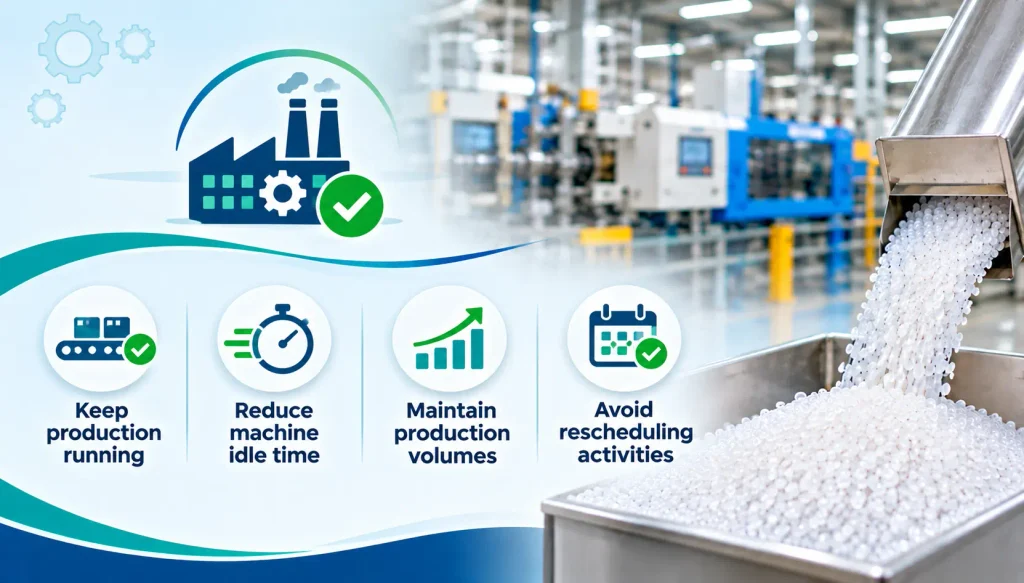
Manufacturing facilities plan their production schedules around the availability of raw materials. When a polymer shipment is delayed, production teams may not have enough material to keep machines running.
Timely polymer material supply helps manufacturers:
- Keep production lines running according to schedule.
- Reduce machine idle time caused by material shortages.
- Maintain planned production volumes.
- Avoid rescheduling workers and production activities.
For manufacturers operating multiple production lines, even a delay in one material category can create scheduling problems across different orders.
2. Reduces Emergency Procurement and Additional Costs
When raw materials do not arrive on time, manufacturers often have limited options. They can wait for the original shipment, source material from another supplier, or arrange faster transportation. Each option can add costs or disrupt existing plans.
The additional expense may include:
- Higher prices from alternative suppliers.
- Express transportation or additional freight charges.
- Extra procurement and coordination costs.
- Production rescheduling and order fulfilment expenses.
According to the MPI 2024 Manufacturing Study, 75% of manufacturers reported higher logistics, transportation, and component or material costs over the previous 12 months.
Reliable polymer delivery services help businesses plan purchases ahead of time, reduce last-minute sourcing, and manage procurement expenses more effectively.
3. Helps Maintain the Right Inventory Levels
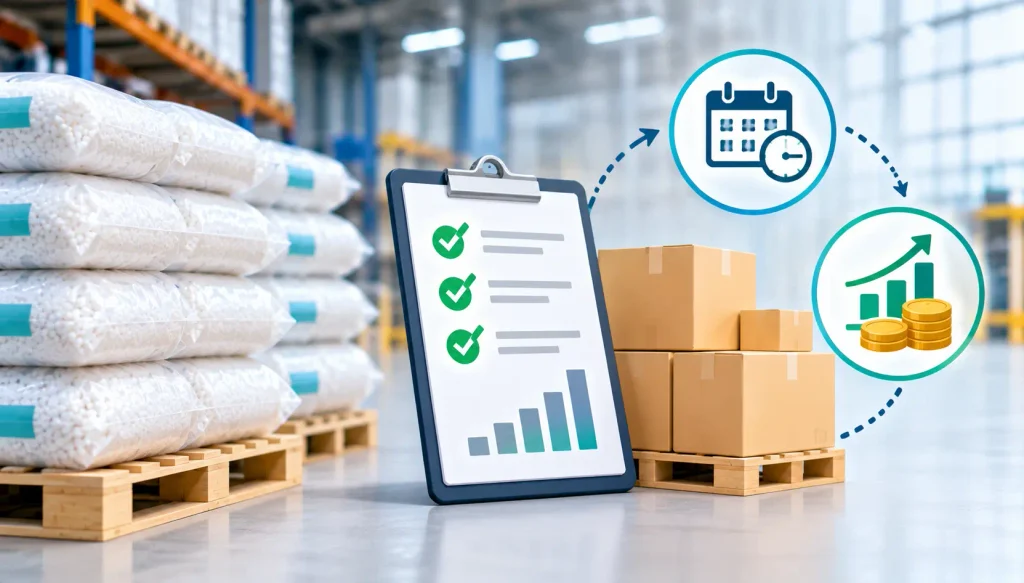
Manufacturers need enough polymer stock to meet production requirements, but maintaining excessive inventory also has a cost. But, if delivery timelines keep changing, the manufacturer may feel the need to maintain larger safety stocks to avoid production interruptions.
This is where predictable delivery schedules become important. It helps manufacturers:
- Calculate reorder requirements based on actual consumption.
- Maintain suitable safety stock for critical materials.
- Avoid unnecessary bulk purchases.
- Reduce storage and inventory holding expenses.
- Plan cash flow around expected procurement cycles.
McKinsey’s 2024 Global Supply Chain Leader Survey found that 34% of respondents were still relying on larger inventory buffers to manage disruptions, down from 59% in the previous survey.
4. Helps Manufacturers Meet Customer Commitments
Manufacturers rarely produce goods without a delivery schedule. They work with distributors, retailers, industrial buyers, and other businesses that expect orders to arrive within agreed timelines. When polymer deliveries are delayed, the impact can extend to the manufacturer’s customers.
This creates a chain reaction:
- Raw material delivery gets delayed.
- Production starts later than scheduled.
- Finished goods are dispatched behind schedule.
- Customers may have to adjust their own production or inventory plans.
For manufacturers, timely bulk polymer supply helps maintain production commitments, coordinate dispatch schedules, and build stronger relationships with business customers.
5. Maintains Material Consistency and Product Quality
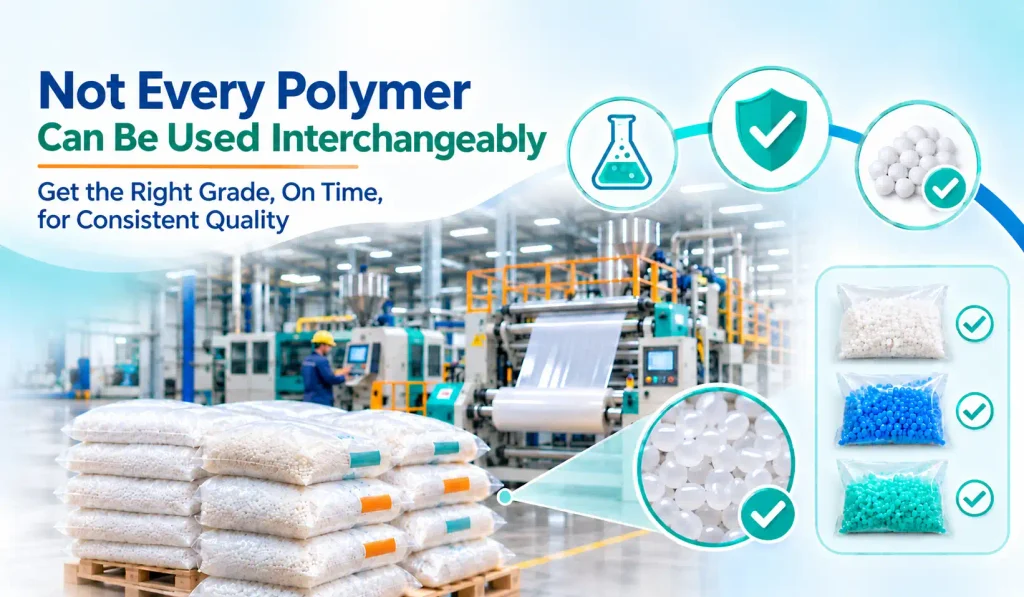
Not every polymer can be used interchangeably. Different grades have specific properties, processing requirements, and end-use applications. A manufacturer cannot simply replace an unavailable material with another grade because it is readily available.
For example, a manufacturer producing flexible packaging films might require a particular grade of LDPE or LLDPE to achieve the required flexibility and processing characteristics. Using a different grade without checking its suitability can affect film properties, production settings, and finished-product quality.
Timely deliveries help procurement teams source the required grades without rushing into unsuitable substitutions. The goal is not just to receive polymer on time but to receive the correct material in the required quantity and condition.
Final Thoughts
Timely polymer deliveries play an important role in keeping manufacturing operations running smoothly.
However, timely delivery starts with choosing the right suppliers and having a well-planned procurement process. Manufacturers should consider material availability, grade consistency, pricing, supplier communication, and delivery commitments when sourcing polymers.
This is where having access to a dependable sourcing network can make a difference. PolyMart is the leading polymer marketplace that helps businesses connect with polymer buyers and sellers. Whether you want to Buy Polymers Online or Sell Polymers Online, the platform offers another way to connect with the polymer market and streamline your sourcing requirements.
A well-planned polymer procurement strategy, supported by reliable supplier relationships, can help manufacturers maintain production continuity and respond better to changing business demands.
Frequently Asked Questions(FAQs)
What factors should manufacturers consider when choosing a polymer supplier?
Manufacturers should evaluate product quality, polymer grade availability, pricing, minimum order quantities, delivery timelines, technical specifications, and the supplier’s ability to handle recurring bulk orders.
How can manufacturers estimate their polymer raw material requirements?
They can review production forecasts, historical material consumption, upcoming customer orders, processing losses, and supplier lead times. This helps procurement teams calculate purchase quantities and avoid unnecessary stock accumulation.
Why do polymer prices change frequently?
Polymer prices are influenced by crude oil and feedstock costs, supply and demand, production capacity, import expenses, currency movements, and transportation costs. These factors can cause price differences between suppliers and purchasing periods.
How can manufacturers verify the quality of polymer raw materials before purchasing?
They should review the material’s technical data sheet (TDS), certificate of analysis (COA), grade specifications, and relevant test results. For critical applications, sample testing can help confirm whether the material meets production requirements.
Is buying polymers online suitable for industrial manufacturers?
Yes. Online polymer sourcing platforms can help manufacturers explore available materials, compare supplier offerings, and connect with potential sellers. Buyers should still verify material grades, specifications, supplier credentials, pricing, and delivery terms before confirming an order.
How can manufacturers reduce risks when sourcing polymers from multiple suppliers?
Manufacturers can establish clear material specifications, evaluate suppliers before purchasing, maintain documented procurement terms, and monitor supplier performance. Having qualified alternative suppliers also reduces dependence on a single sourcing channel.