

Polymer Market Update: Import-Duty Decision, Crude Volatility and Weak Demand Keep Market on Edge
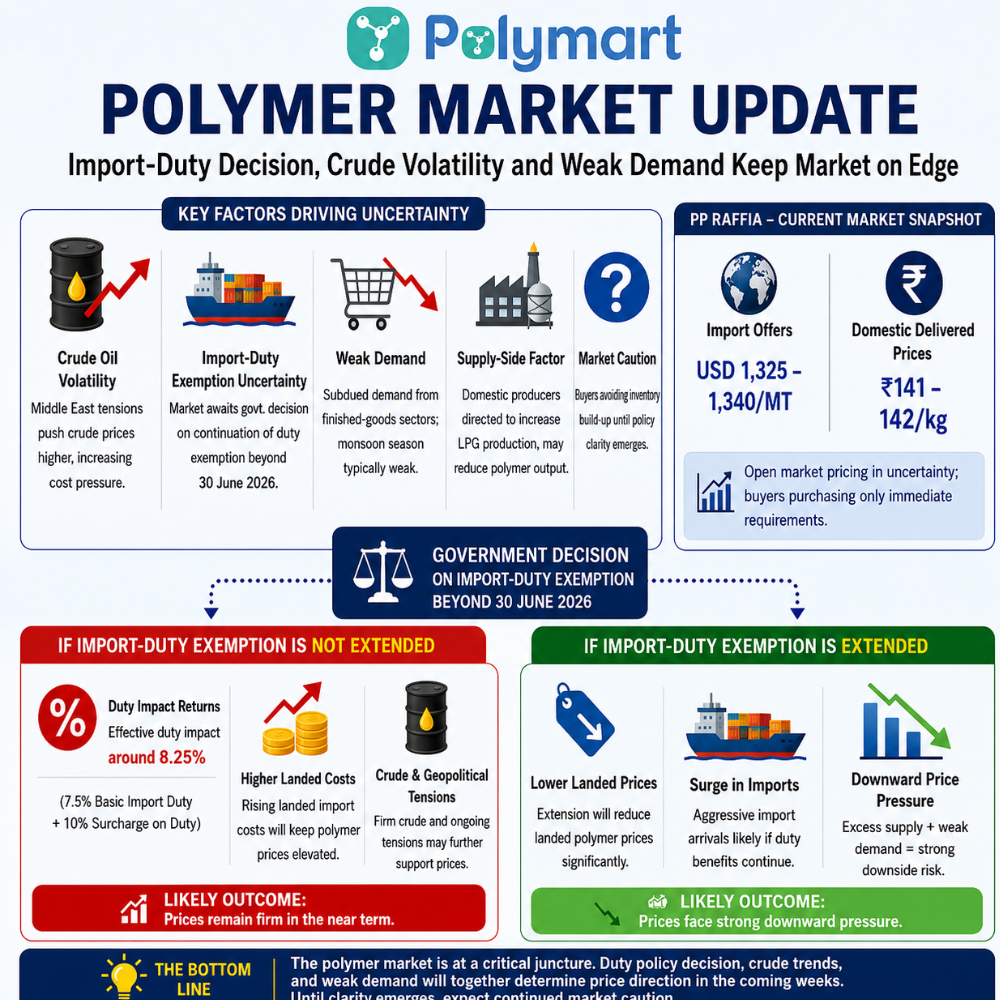
The polymer market is currently moving in a cautious mode amid a combination of geopolitical uncertainty, crude oil volatility, weak demand, and uncertainty around the continuation of import-duty benefits beyond 30 June 2026. Recent escalation in the Middle East has pushed crude oil prices higher, creating cost pressure across the polymer value chain. At the same time, market participants are closely tracking whether the government will extend the current import-duty exemption. This policy decision has become a major price trigger for the polymer market. If the import-duty exemption is not extended, the effective import duty impact will return to around 8.25%, including 7.5% basic import duty plus 10% surcharge on duty. In that case, landed import costs will rise, and the market may have to adjust to elevated polymer prices in the near term, especially if crude oil remains firm and geopolitical tensions continue. However, if the import-duty exemption is extended, it could significantly reduce landed polymer prices. This may open the door for aggressive import arrivals, and the domestic market could become flooded with imported material. In the current weak demand environment, such additional supply may create serious downward pressure on prices. PP Raffia is one example of this broader trend. Current import offers are being discussed around USD 1,325–1,340/MT, while domestic delivered prices are hovering around ₹141–142/kg. The open market appears to be pricing in uncertainty, with buyers avoiding aggressive inventory build-up until there is clarity on duty policy. Demand from finished-goods segments remains subdued. Polymer processors are witnessing moderation in order inflows, and the monsoon period is typically a lean season for several end-use industries. Some processors have also started resisting elevated price acceptance and are limiting purchases to immediate requirements. Another supply-side factor is the reported direction to domestic polymer producers to increase LPG production, which may reduce polymer output from domestic companies. This could support prices if import-duty benefits are withdrawn, but the impact may be offset if duty exemption is extended and imports increase sharply. Overall, the polymer market is standing at a critical point. If duty exemption ends, prices may remain firm due to higher landed costs and crude volatility. But if the exemption is extended, cheaper imports combined with weak domestic demand could trigger strong downward price pressure. Until policy clarity emerges, buyers are likely to remain cautious and continue hand-to-mouth procurement.Disclaimer:PolyMart does not offer guarantees regarding the accuracy, reliability, or completeness of the information provided on its platform. Users are advised to independently verify any data before relying on it for decision-making purposes.